Best Apps for Personal Trainers in 2026
You Could Be a Great Trainer and Still Have a Terrible Business
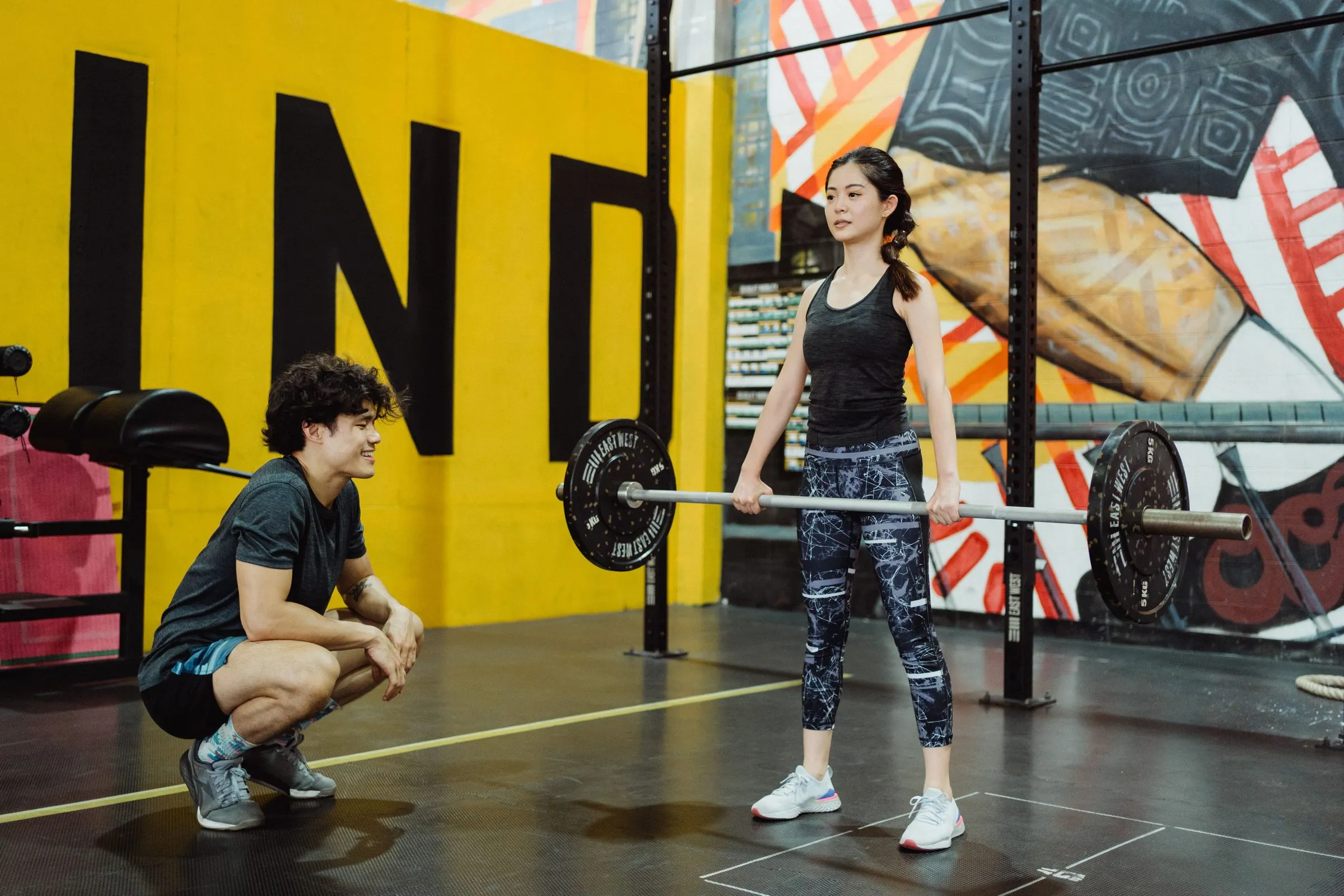
Your clients might love training with you. But if you're chasing payments, forgetting to follow up, building workouts five minutes before sessions and only posting on Instagram when business gets slow, they see that too.
Being a great coach doesn't automatically make you look like a professional.
The good news is you don't need employees, an assistant or some complicated business system. You need a few tools that handle the parts of personal training nobody taught you when you got certified.
The short version
- The Training Notebook One for running your actual coaching.
- MyFitnessPal for seeing what your clients really eat.
- Stripe for getting paid without chasing people.
- ChatGPT for learning, thinking and getting unstuck.
- Canva for marketing yourself.
- Mailchimp for staying in front of people.
- Apple Watch for seeing what clients do outside the gym.
Are you actually prepared when your client walks in?
Your client can tell when you're winging it.
You know that moment.
They're standing there waiting while you're scrolling through your phone trying to remember what you did last week.
Was it Romanian deadlifts?
How much weight?
Did their knee bother them?
Were you supposed to increase the load today?
Meanwhile, they're paying you for this hour.
That's exactly the kind of situation I wanted to eliminate when I built The Training Notebook One.
Your workouts, programs, client notes, assessments, progress photos, measurements and training history should be somewhere you can actually find them.
Not buried in your Notes app.
Not somewhere in WhatsApp.
Not in a spreadsheet you haven't opened since March.
Not in your head.
You should know what your client did last time and what they're doing today before they arrive.
TTN One lets you start a workout with a client in 2 taps. You can build a 6-exercise workout in under 15 seconds.
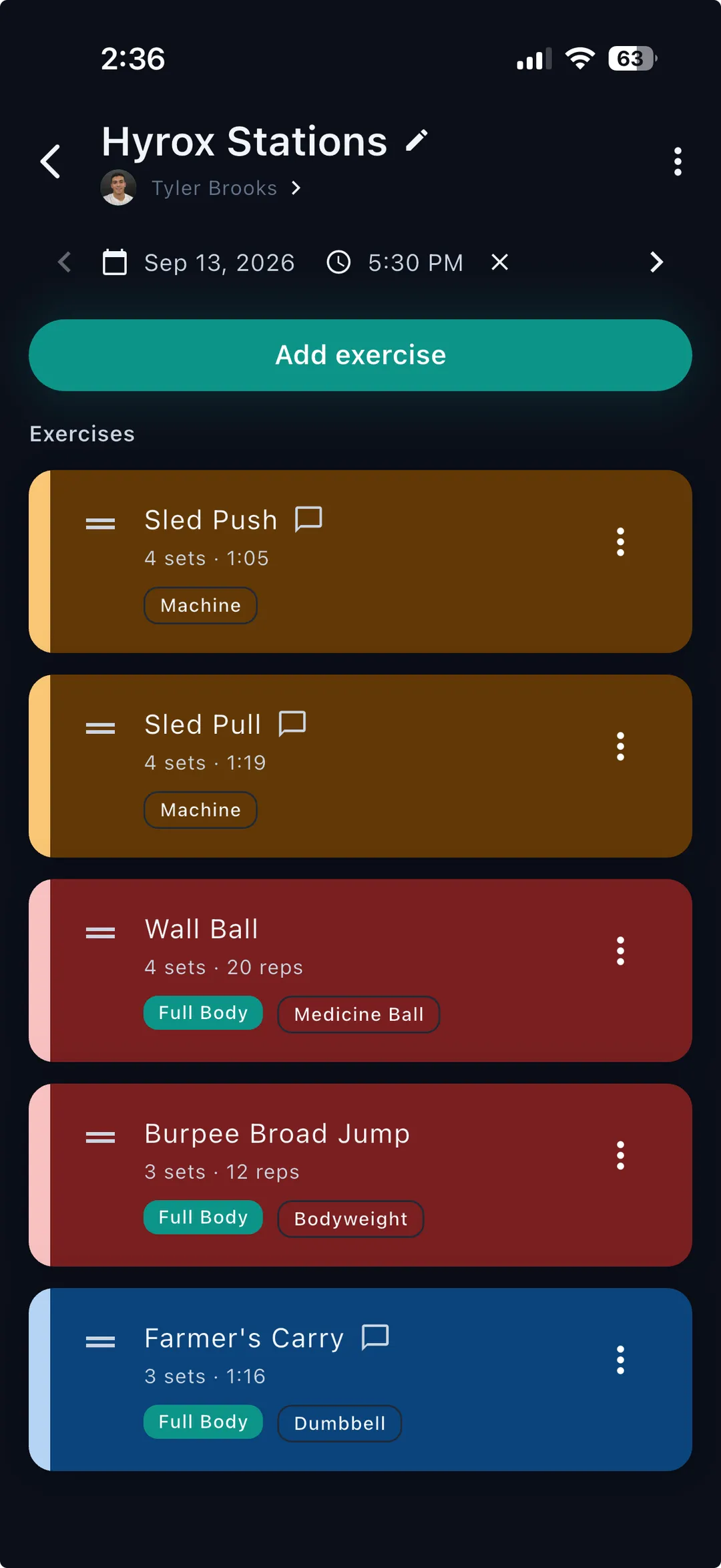
Build programs. Save templates. Put workouts on your client's calendar. Track their progress. Keep their coaching information together.
Your client gets their own login too. They can see their workouts, perform them and log their check ins.
The point isn't having more software.
The point is walking into the session prepared.
Do you actually know what your client is eating?
Probably not.
And your client probably doesn't either.
Ask someone what they ate yesterday and you'll get the highlight reel.
Chicken.
Rice.
Eggs.
Protein shake.
Sounds pretty good.
Then they start tracking with MyFitnessPal.
Now the cooking oil appears.
So does the latte.
The handful of nuts.
The dressing.
The afternoon snack.
The two beers.
The bites of their kid's dinner.
The weekend that apparently didn't count.
This is why I like MyFitnessPal for clients.
It gives you hard data.
Your client can track calories and macros and share their food diary with you.
Now you can stop having conversations based entirely on memory.
If someone's trying to lose body fat and nothing has changed for six weeks, I want to see what they're eating.
Not what they think they're eating.
What they're eating.
How many calories?
How much protein?
What's happening Friday through Sunday?
Are portions slowly getting bigger?
Are they eating 600 calories before dinner without realizing it?
Clients are often surprised when they finally see the numbers.
That's useful.
They're learning what food actually looks like instead of dividing everything into "healthy" and "unhealthy."
A salad can have a lot of calories.
A burger can fit into someone's day.
Protein doesn't magically appear because the meal contained chicken.
Hard data makes you a better coach because now you have something real to work with.
Are you still chasing clients for money?
Stop doing that.
You shouldn't finish a session and then spend the next three days wondering whether someone is going to pay you.
You're a trainer, not a debt collector.
Stripe handles the part of the relationship that can get awkward very quickly.
You can take payments, send invoices and keep a record of what's coming into your business.
More importantly, it creates separation.
The workout is the workout.
The payment is the payment.
You don't need to stand next to the squat rack saying, "Hey, by the way, I think you still owe me for last month."
That's uncomfortable for you.
It's uncomfortable for them.
Set up a professional payment system and remove the conversation.
You did the work.
Get paid.
What do you do when you don't know the answer?
Find it.
One of the biggest changes in my own workflow has been having AI available whenever I hit a wall.
ChatGPT isn't your personal training certification.
It's not your experience.
And it hasn't spent years standing on a gym floor watching real people move.
But it's one hell of a brainstorming partner.
Maybe you've been training the same client for three years and you're bored with your own programming.
Tell ChatGPT what you've been doing.
Give it the client's goal.
Give it the equipment.
Tell it what the client hates.
Tell it what hurts.
Tell it what you've already tried.
Then ask for ideas.
Don't like the first ten?
Ask for ten more.
You can use it to explore a training method you've heard about but never studied.
Ask it to explain something in plain English.
Challenge it.
Ask why.
Ask for the argument against what it recommended.
You can brainstorm warm ups, finishers, progressions, regressions, class formats and program structures.
You can also use it outside programming.
Need ideas for an Instagram post?
Ask.
Need to explain progressive overload to a client without sounding like a textbook?
Ask.
Need ten newsletter topics?
Ask.
The mistake is treating AI like an oracle.
Don't blindly copy a program because a chatbot gave it to you.
You know the client.
Use AI to give your brain more material to work with.
Then coach.
If nobody knows you're a good trainer, does it matter?
It matters to your current clients.
It doesn't do much for getting your next one.
You can hate social media.
You can think Instagram is ridiculous.
You can complain that trainers spend more time filming workouts than coaching them.
Some of that is probably true.
It doesn't change the fact that a potential client may look at your Instagram before they ever speak to you.
What do they see?
Six posts from 2024?
A blurry picture of a dumbbell?
A motivational quote you stole from somebody else?
Or do they see someone who clearly knows how to coach?
That's why Canva makes my list.
You can take what you know and turn it into something people can consume.
A carousel explaining why someone's squat keeps falling apart.
A post about protein.
A promotion for your Saturday class.
A client education graphic.
A breakdown of an exercise.
An announcement that you have two training spots available.
You don't need to become a designer.
You need to communicate.
And AI has made this considerably easier.
You can use tools like ChatGPT to brainstorm the idea, develop the hook and work through the copy. Canva gives you somewhere to turn those ideas into actual content.
One good training thought can become a post instead of dying in your head between clients.
That's the opportunity.
Your competition isn't necessarily a better trainer.
Sometimes they're better at making sure people know they exist.
How many former clients have completely forgotten about you?
This one hurts because trainers spend years building relationships and then throw them away.
Think about how many people you've trained.
Now think about how many you've spoken to in the last year.
Exactly.
Someone trained with you for two years.
They changed jobs.
Moved.
Had a baby.
Got injured.
Money got tight.
Life happened.
Three years later they're ready to train again.
Who do they call?
Hopefully you.
But you haven't spoken to them since their last session.
They've seen another trainer on Instagram 40 times since then.
Guess who gets the message?
This is why I like Mailchimp.
Email gives you a reason to stay in contact.
Not every day.
Please don't become that person.
Send something when you have something useful to say.
Maybe once or twice a month.
A workout they can do while traveling.
A short piece about getting stronger after 40.
Three ways to get more protein.
Something you've learned from coaching.
A new class.
A few open training slots.
Something useful enough that seeing your name in their inbox isn't annoying.
You aren't trying to close a sale every time you email somebody.
You're staying alive in their memory.
Because people don't always need a trainer today.
They might need one six months from now.
And when that day comes, you don't want them searching Google for "personal trainer near me."
You want them thinking of you.
What is your client doing during the other 165 hours?
This might be my favorite wildcard on the list.
Apple Watch.
You might see your client three hours this week.
There are 165 hours when you're nowhere near them.
That's where a lot of the story is happening.
How many steps are they getting?
How much are they sleeping?
How active are they?
What workouts are they doing without you?
What's happening with their heart rate?
How many calories are they burning?
Your client already has a lot of this information sitting on their wrist.
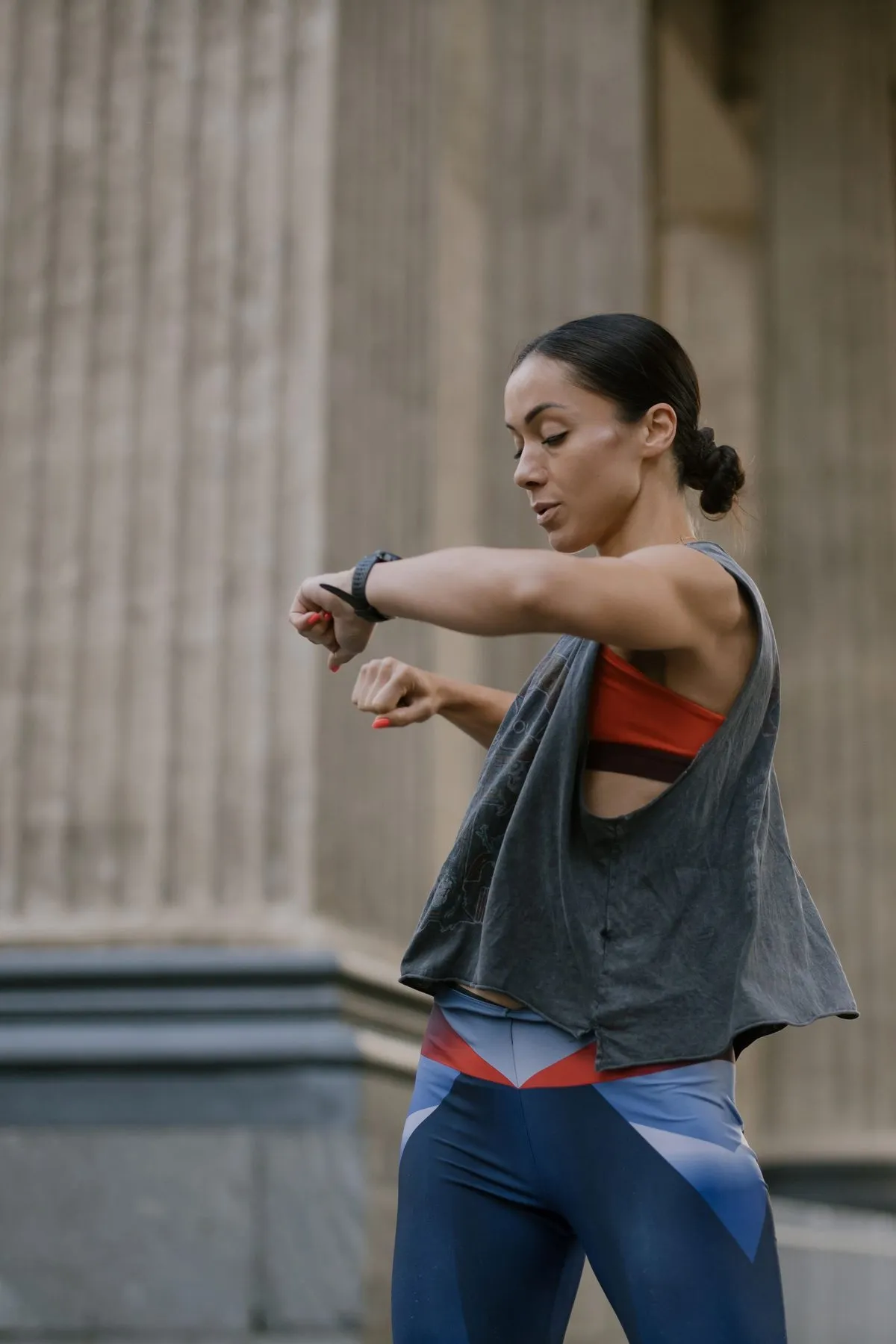
Use it.
Someone tells you they're active all day.
Look at the steps.
Someone tells you they sleep eight hours every night.
Look at the sleep.
Someone says they've been doing "a little cardio."
Then you find out they've added five hard runs a week while you're wondering why their legs are constantly dead.
Now we're having a useful conversation.
This isn't about turning your client into a walking spreadsheet.
It's context.
Combine Apple Watch activity with their MyFitnessPal data, their workouts, their progress and what they're telling you.
Now you're seeing more of the person you're actually coaching.
That's a hell of a lot better than:
"How was your week?"
"Good."
"How's the diet?"
"Pretty good."
Excellent.
Glad we cleared that up.
Questions trainers ask
What's the best app for personal trainers?
The best app is the one that fixes the biggest problem in your business right now. If you're disorganized with clients, fix that first. If people aren't paying on time, fix payments. If nobody knows you exist, work on marketing. Don't download seven apps tonight and pretend that's productivity.
Should personal trainers really use ChatGPT?
Yes, especially if you treat it as a thinking tool instead of an automatic answer machine. Use it to learn, brainstorm, challenge ideas and get yourself unstuck. Then apply your own experience. The trainer still makes the decision because the trainer is the one standing in front of the client.
Should my clients track their food every day?
Tracking can be extremely useful when you need to understand what someone is actually eating. It turns vague conversations into numbers you can discuss. It also teaches clients what portions, calories and macros look like. The goal isn't necessarily to have them logging every bite for the rest of their lives.
Is social media really necessary for personal trainers?
You can build a training business without becoming an influencer. But people still need a way to discover you and decide whether they trust you. Social media gives potential clients a window into how you think and coach. You don't need to dance. Teach something useful and show up consistently.
Why email former clients if they're no longer training with me?
Because "not training with you today" doesn't mean "never training with you again." People's jobs, schedules, finances and priorities change. Staying in contact keeps the relationship alive. Give them useful information occasionally so when they're ready for coaching again, they already know exactly who to call.
Being a great personal trainer is still the most important part of the job.
But being great and being disorganized, invisible and terrible at business is a hard way to make a living.
Use the tools. Get your business together. Then spend more of your time doing the part you're actually good at.
Try TTN One free for 7 days on the App Store, on Google Play, or in your browser.

