Every Trainer Eventually Has to Explain Why Spot Reduction Is Baloney
Your client can train the body part they hate every day, but that doesn't mean the fat sitting on top of it got the message.
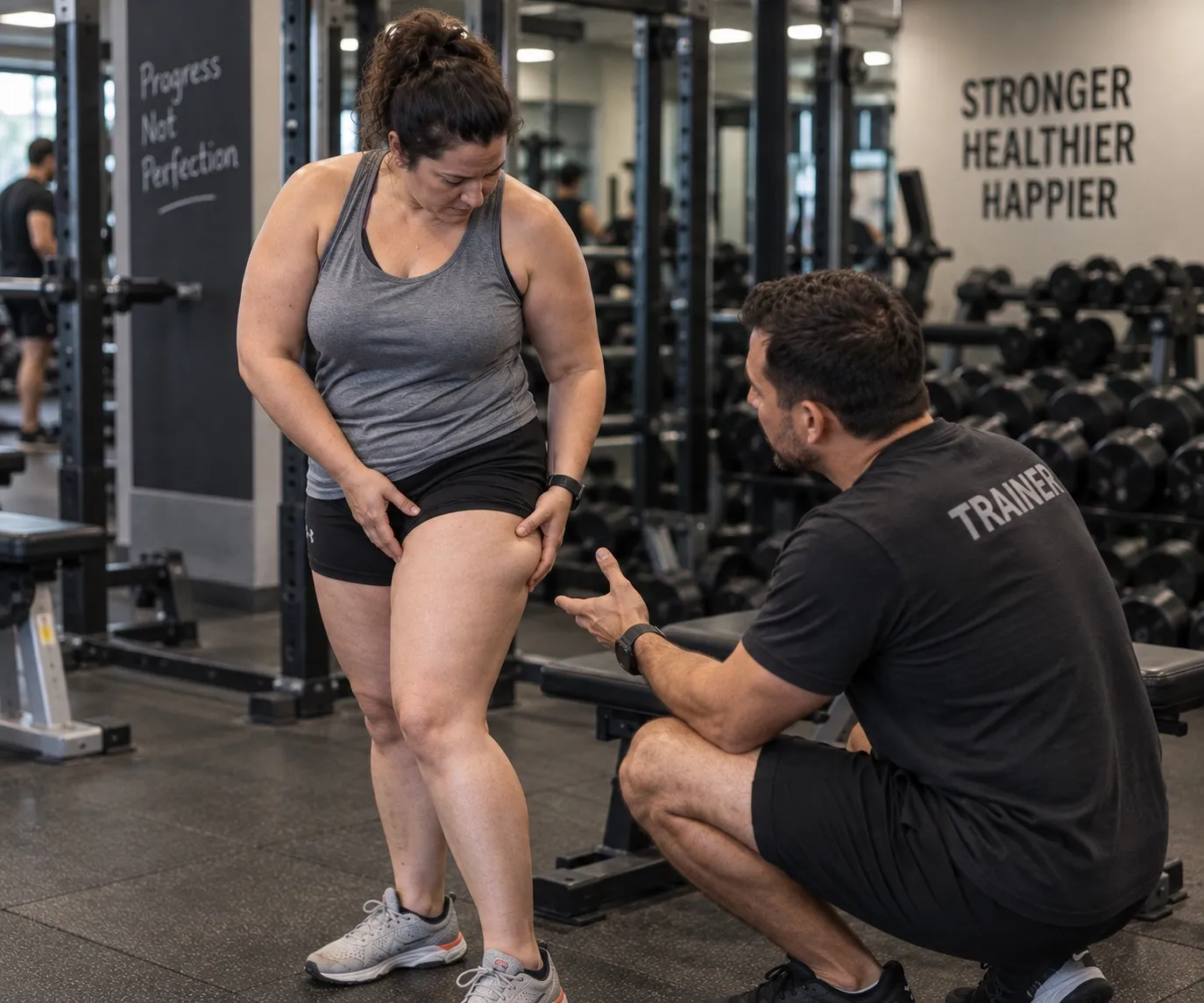
At Equinox, I trained a woman whose upper body was already quite lean, but she carried most of her extra body fat around her thighs. She wanted exercises to slim them down.
I had to give her the answer clients hate hearing.
You don't get to choose where your body loses fat.
Whether we like it or not, your body decides where it stores fat and where it gives it up.
I understood why she thought otherwise.
Before I became a personal trainer, I thought crunches burned belly fat.
Of course I did.
Your stomach has fat on it. Crunches make your stomach burn. It makes perfect sense when you don't know any better.
I thought those electrical ab stimulators might work too. At one point I almost bought a cream that supposedly helped burn fat.
I'm glad the internet wasn't as efficient at taking my money back then.
Twenty years later, I've had some version of this conversation with clients more times than I can remember.
The belly.
The thighs.
The back of the arms.
Under the chin.
"This is the part I want to lose. What exercise should I do?"
That's when you need to explain spot reduction.
And you need to explain it in a way your client actually understands.
"Can I do crunches to lose my belly?"
No. Crunches train your abdominal muscles. They don't tell your body to burn the fat sitting on top of them.
That's the first thing I explain.
Your abs are muscle.
Belly fat is stored energy.
They're two different things occupying roughly the same neighborhood.
Train your abs and those muscles can get stronger.
Lose enough body fat and those muscles may become more visible.
But doing more crunches doesn't give your body instructions about where that fat should come from.
I've watched people attack this problem from every possible angle.
BOSU ball crunches.
Ab machines where you rotate left and right.
Leg raises.
Endless variations of abdominal exercises.
You can build a hell of a strong midsection doing some of those exercises.
But your body isn't sitting there thinking, "He's doing crunches. Better grab some fat from the stomach."
The same thing applies to your client's thighs.
Or arms.
Or the fat under their chin.
You can choose which muscle you train.
You can't choose which fat your body burns first.
That's the sentence I want the client to remember.
"But I can feel it burning. Doesn't that mean I'm burning fat there?"
No. It means the muscle you're training is working.
This is probably one of the reasons the spot reduction myth has survived for so long.
It feels true.
Your client does 30 crunches.
Their abs are burning.
They're sweating.
Their stomach feels like it's doing all the work.
So naturally they connect that feeling with the fat sitting directly above the muscle.
The problem is that muscular fatigue and fat loss aren't the same thing.
We've tested the basic idea behind spot reduction.
People have trained one arm or one leg repeatedly for weeks while researchers compared what happened on the trained side with the untrained side.
The muscle responds to training.
The fat sitting over that particular muscle doesn't get some special eviction notice.
That's about as much science as I think most clients need during a training session.
I'm not giving somebody a physiology lecture while they're trying to catch their breath.
I tell them:
"You can target the muscle. You can't target the fat covering it."
Now they understand.
Next set.
"Then why does everyone talk about toning your belly, thighs and arms?"
Because "tone your thighs" is a much better sales pitch than "lose enough total body fat and eventually your thighs may get leaner."
We've been selling people versions of this idea forever.
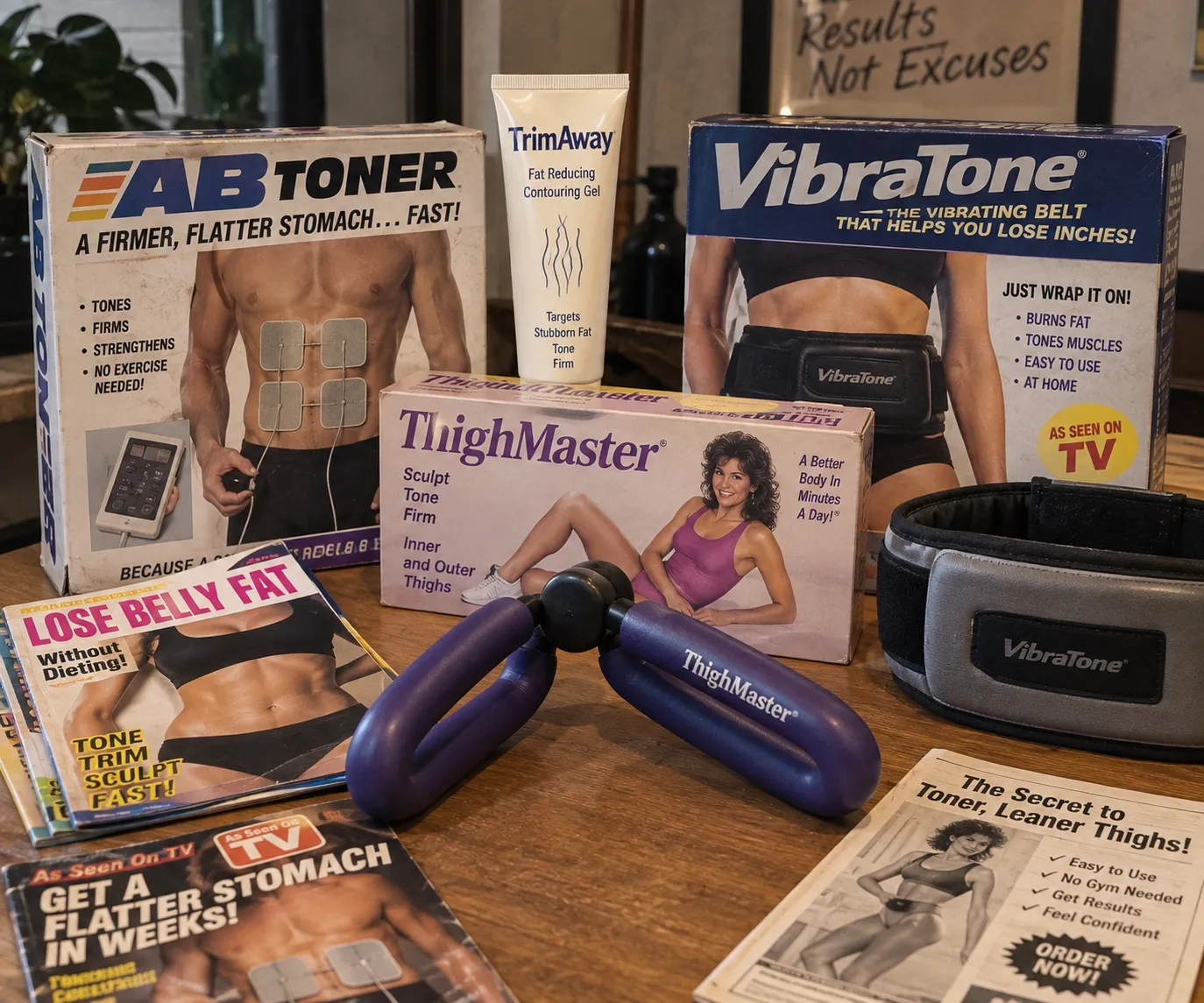
I remember electrical ab stimulators.
Attach something to your stomach, turn it on, let electricity do the work.
I thought they sounded pretty convincing when I was younger.
There were creams that supposedly helped burn fat.
I almost bought one.
Then you had all kinds of machines and expensive treatments promising to attack problem areas.
Before that, there was the ThighMaster.
The product changes.
The promise barely moves.
You have fat somewhere you don't like.
Buy this.
Apply it there.
Move this body part.
Wear this thing.
Problem solved.
It's a brilliant pitch because it goes directly after an insecurity.
That's also why I have very little patience for trainers who sell the same idea.
If a trainer knows spot reduction doesn't work and sells a belly fat workout anyway, he's selling snake oil.
If he genuinely believes the workout is melting fat specifically from someone's stomach, he needs to go back and learn how fat loss works.
Neither option is great.
The word "toning" doesn't help.
Most clients who say they want to tone their arms aren't asking for some mysterious biological process.
They want less fat and enough muscle underneath to give the arm some shape.
Fine.
Now we know what we're actually trying to accomplish.
Build or maintain muscle.
Reduce body fat.
Give it time.
Not as exciting as a cream that melts your love handles while you sleep.
It does have the unfortunate advantage of being real.
"Why is my belly still there when I've already lost weight?"
Because fat doesn't necessarily leave your body in the order you want it to.
I've seen this frustrate clients more than almost anything else during fat loss.
Men often complain to me about their belly and the fat under their chin.
Women often complain about their thighs and arms.
But everybody is different.
Your body has places where it likes storing fat.
Genetics plays a big role.
And the place bothering your client most can be one of the last places where they see the change they want.
I had another client who became extremely fit.
She got down to around 19 percent body fat.
She looked great.
But she could still see a little belly.
That's what she saw when she looked in the mirror.
Not everything else she'd accomplished.
The belly.
We kept going.
It took roughly another six months before that area finally leaned down the way she wanted.
There was another issue hiding in plain sight too.
She had an anterior pelvic tilt.
The position of her pelvis pushed her stomach forward and made the little belly she had look more pronounced than it actually was.
So part of what she thought was remaining belly fat wasn't entirely a fat problem.
Improving her posture helped change how her stomach looked too.
That's a useful lesson for a trainer.
Don't assume every appearance issue your client points at has one cause.
And don't let the client assume their program isn't working because the one place they hate hasn't changed fast enough.
Look at everything.
Measurements.
Progress photos.
Body weight.
Strength.
How their clothes fit.
How their body has changed over months.
I built The Training Notebook One as the app I use for tracking client progress, measurements and check-ins.
Because memory is terrible at seeing slow progress.
Your client looks at their stomach every morning.
Of course they don't notice a tiny change from yesterday.
Show them what happened over three months.
That's a different conversation.
"So what actually gets rid of the fat?"
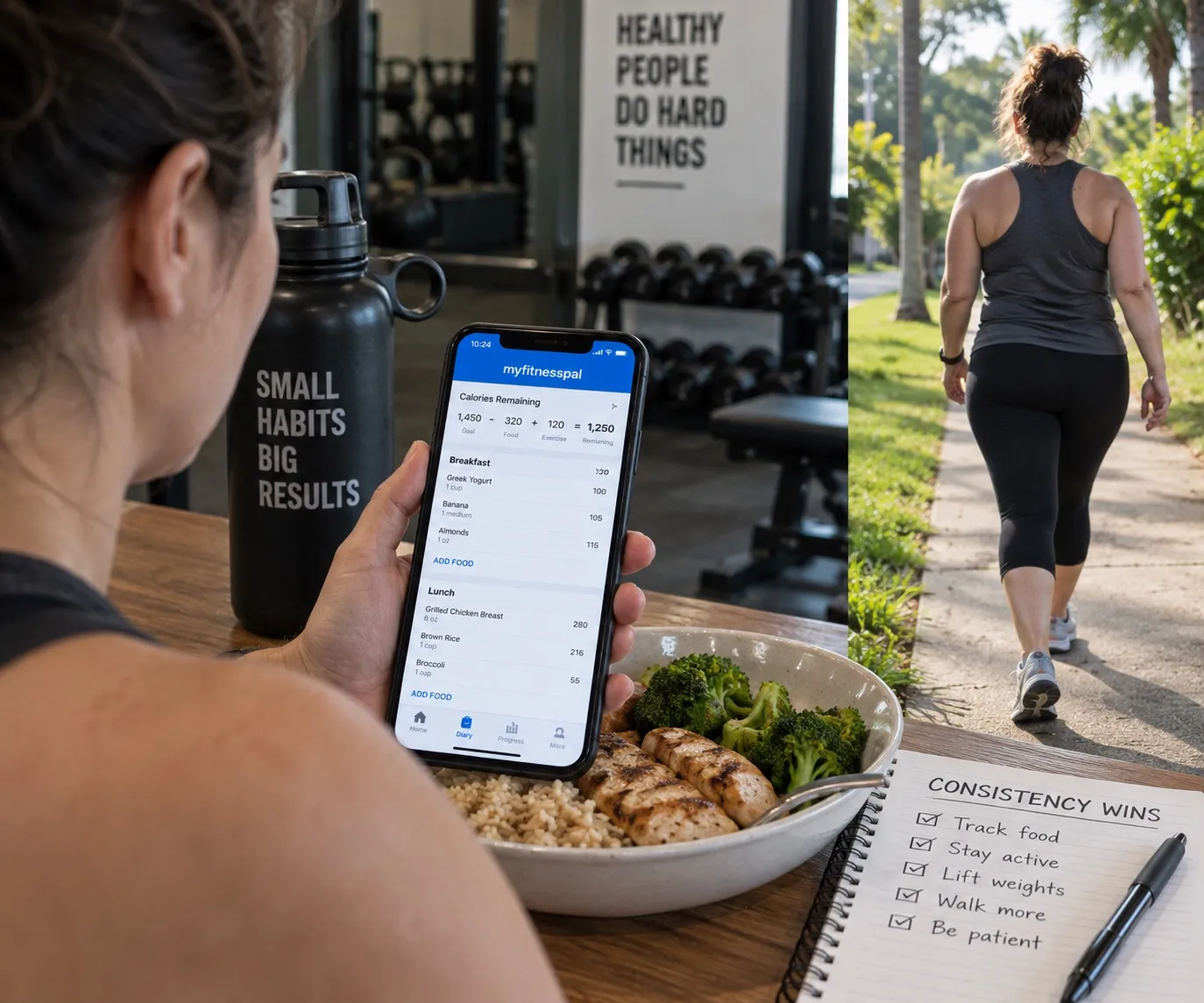
You lose body fat mostly in the kitchen, combined with being active consistently for months.
That's the answer.
It's not sexy.
Nobody is going to sell a late night infomercial around "pay attention to how much you eat for the next six months."
But that's the work.
Your client needs to be in a calorie deficit long enough for the body to use stored energy.
The problem is that a lot of clients have absolutely no idea how many calories they're eating.
They think they do.
That's different.
This is why food tracking can be such an eye opener.
I've had clients tell me they're eating well and can't understand why they're not losing fat.
Okay.
Track it.
Then I start asking about the weekend.
What did you drink?
How many?
What was in the cocktails?
Let's put those drinks into MyFitnessPal and look at the calories.
Suddenly the mystery starts solving itself.
Alcohol counts.
The snacks count.
The restaurant meal counts.
The cooking oil counts.
The chocolate bar counts.
You can eat a 350 calorie chocolate bar in five minutes.
Burning those calories through exercise takes considerably more effort.
That's why I tell clients they can't out-train a bad diet.
Exercise matters.
Strength training matters.
Daily activity matters.
Walking matters.
But if the client eats back everything they're burning and then some, another ab workout isn't going to rescue them.
This is the part clients don't always want to hear.
You have to learn how much you're actually eating.
Because if you don't know, there's a good chance you're underestimating it.
Then stay active.
Strength train consistently.
Walk more.
Get the sedentary client out of the chair more often during the rest of their day.
And do it for months.
Not ten perfect days followed by "nothing works for me."
Months.
That's fat loss.
"How do I know if a belly fat product is a scam?"
Look at the insecurity they're selling before you look at the product.
Fat loss scammers understand something very well.
People want the part of their body they hate gone now.
That's the opening.
The belly.
The arms.
The thighs.
The chin.
Promise to fix that specific thing quickly and you've got their attention.
Teach your client to slow down when they see that promise.
The biggest red flags are unrealistic timelines, dramatic before and after photos with very little explanation, mysterious proprietary blends, products claiming to target fat from one specific area and free trials that quietly turn into recurring auto shipments.
Before and after photos deserve particular suspicion.
Lighting changes bodies.
Posture changes bodies.
Camera angles change bodies.
A tan changes bodies.
Pulling your stomach in certainly changes bodies.
And sometimes the person really did lose fat.
That still doesn't prove the product in the photograph caused it.
Maybe they also changed their diet.
Maybe they started training.
Maybe six months passed.
Maybe the photograph is doing considerably more work than the product.
Your client doesn't need to become a scientist.
Teach them to ask one question:
"Why should this make fat disappear specifically from that part of my body?"
If the answer starts sounding like magic, keep your credit card in your pocket.
"What do I tell my client when the belly is the last thing to go?"
Tell them the truth before they get frustrated enough to quit.
This is where being a coach matters.
Your client has lost weight.
Their waist measurement is down.
They're stronger.
Their clothes fit better.
Their face looks leaner.
Then they grab their stomach.
"But this is still here."
Don't dismiss it.
That's the part they care about.
Acknowledge it.
Then show them what's actually happened.
I'd tell them:
"Your body is changing. We don't get to choose the order. If this is where your body likes storing fat, this may be one of the last places it comes off."
Then look at what you can control.
Are we tracking food?
Are we actually in a calorie deficit?
Are weekends wiping out five good days?
How much alcohol are we drinking?
Are we strength training consistently?
Is someone sitting at a desk all day and then expecting three workouts a week to carry the entire load?
Can we get them walking more?
This is where consistency stops being a motivational poster and starts actually mattering.
Months of work.
Not days.
And the leaner your client wants to become, the more those small habits start showing up on the scoreboard.
Don't respond to a stubborn belly by throwing another 200 crunches into the program.
Look at the actual problem.
Then coach the person through it.
Questions trainers ask
Does spot reduction work for belly fat?
No. Abdominal exercises train the muscles underneath belly fat, but they don't tell your body to remove fat specifically from your stomach. Overall body fat needs to come down. Where your body loses that fat first, and where it holds onto it longest, varies from person to person.
Can crunches help a client lose belly fat?
Crunches can make the abdominal muscles stronger, which is a perfectly good reason to use them. They don't selectively burn the fat covering those muscles. If belly fat is the concern, look at the client's overall calorie intake, activity, strength training and consistency instead of adding another hundred crunches.
Why is my client losing weight everywhere except their stomach?
Their stomach may be one of the places their body prefers storing fat. Fat loss isn't always visually even, so the face, shoulders or other areas may change before the stomach does. Track measurements and photos alongside body weight so one stubborn area doesn't convince the client that months of real progress somehow didn't happen.
Can a client out-train a bad diet?
Not realistically if they're consistently eating enough to erase the energy they're using through training and daily activity. Food is incredibly easy to consume compared with the work required to burn that energy. Tracking for a while can show a client where their calories are actually coming from, especially drinks, snacks and weekends.
What should a personal trainer say when a client asks how to lose belly fat?
I'd tell them, "We can reduce your overall body fat, but we can't choose where your body takes it from first." Then explain what you can control. Track food, create an appropriate calorie deficit, strength train, increase daily activity and give the process enough time to work.
You can choose which muscle you train.
You can help your client lose body fat.
You don't get to choose where it comes off first.
Try TTN One free for 7 days on the App Store, on Google Play, or in your browser.

